“What we do just doesn’t translate.”
Wrong forms for the work
Mid-shot photos when the dance lives in long shot and close-up. Monotone storytelling without space for emotion to land. The forms she was using were built for someone else’s practice.
What she did didn’t survive the trip out of the studio. Nine months changed that. The brand book is what came through.
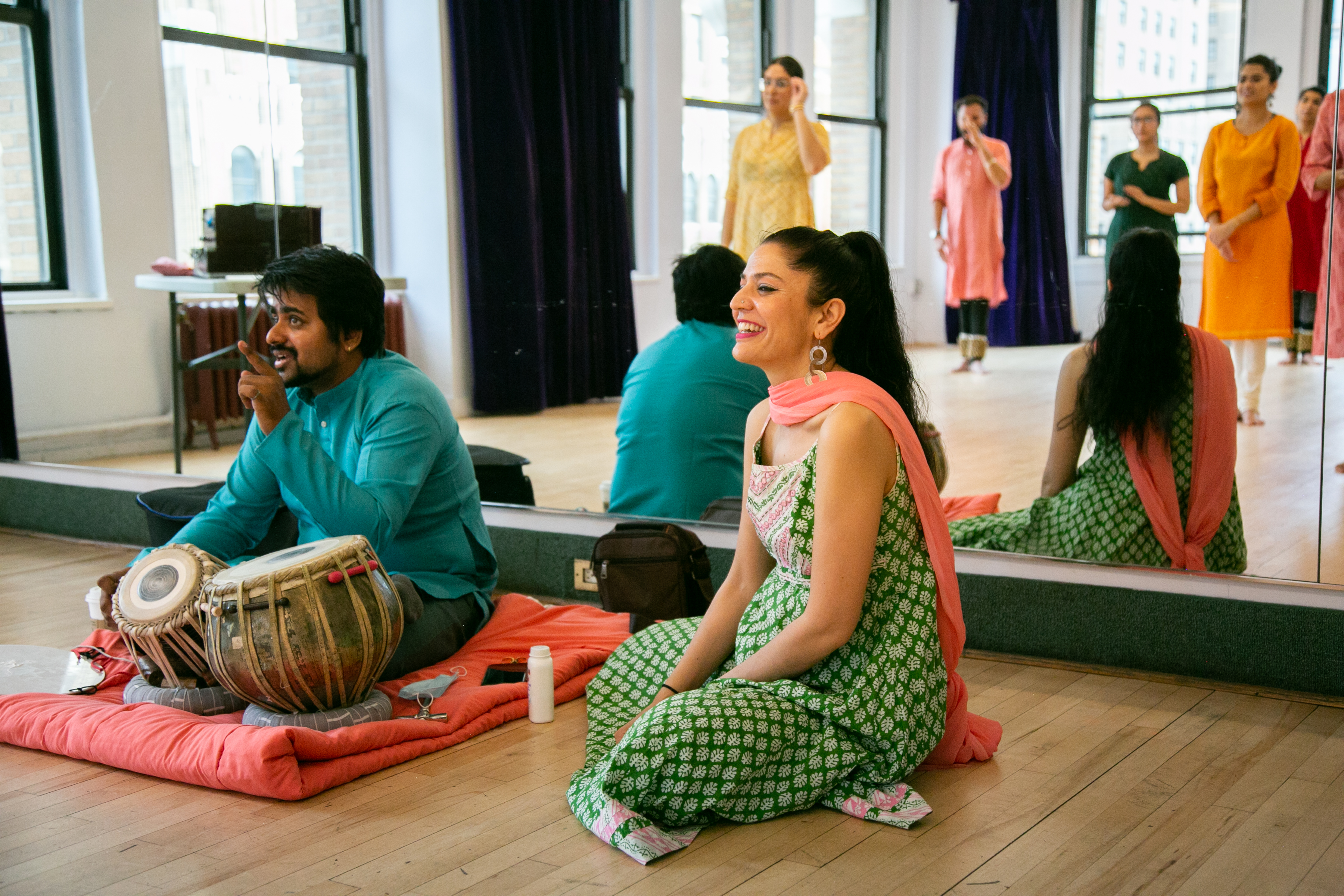
Rachna is a Kathak soloist who trained for three decades under the late Pandit Chitresh Das. She runs a teaching program. She tours. She had values she’d been living by for years: fire, riyaz, raise don’t pander, no shortcuts. The conviction was already there.
But something wasn’t reaching. She sounded different on stage than on social. Her photographers were sending the wrong shots. Her grant writing was somehow less than her grant thinking.
“What we do just doesn’t translate on social media. I don’t want to accept that.”
Rachna, January 2025The work was clear in the room. It didn’t survive the trip to a photographer, a grant panel, or a feed.
A philosophy isn’t a brand. The translation is.
her conviction was already there. what didn’t exist yet was the form it travelled in.
Across the first months, the same friction kept showing up. None of it was about Rachna lacking anything. All of it was about the hand-off.
“What we do just doesn’t translate.”
Mid-shot photos when the dance lives in long shot and close-up. Monotone storytelling without space for emotion to land. The forms she was using were built for someone else’s practice.
“Maybe I’m intimidating. Inaccessible. Elitist.”
Other South Asian dancers in NYC didn’t write back. She read the silence as exclusion and started softening — making herself more palatable, easier to fit. The world had been telling her to shrink for years. The silence felt like proof.
“A grant. A post. An email. A photo brief.”
Each surface got its own draft, written from scratch. Hours per piece, four versions of herself on the page. Each one a partial. None of them quite her.
“I told them what I wanted. They sent something else.”
Her photographer, her video editor, her apprentices — they were all working from descriptions in her head. There was no document anyone could open and act from. Her practice stopped at the edge of the room she was in.
We didn’t structure the engagement as a brand project. We structured it as four translations — one per block. Each one got its own kind of work, sometimes spread across many sessions, often sideways through unrelated requests: grant applications, festival prep, photo direction, the long conversations about what mattered to her.
Once the blocks were down enough, we tried to set the work down in writing. Three attempts, each one a closer match to what she actually meant. The third one was operational: testable, transferable, true.
Four voice rules, four things she stands for. The right concepts, in the wrong shape — descriptive, not yet usable.
Voice: Uncompromising / Inviting but Selective / Raw and Generous / Conscious and Political.
Twice as long. Fire surfaces as a keyword. Two competing ways of saying what she stands for, both written into the same draft. A sign the synthesis wasn’t done.
One frame held: Fire / Body / Conscious / Craft Precision. The other one got dropped.
Five values, each with a Definition, a Behaviors column, and a Never column. A form a collaborator can pick up and act from.
The shape that survived contact with her practice. The brand book was built from this.
Riyaz is the daily practice in Indian classical music and dance — rigour as devotion, repetition as evolution, slowness as spiritual technology. She brought it in. We let it carry the frame. Every value, every visual choice, every behavior on the next pages traces back to one of these nodes. This is what was in the room. The book is what came out of it.
A value without a behavior is a poster. The shape we landed on forces every value through two columns — the action it produces in the world, and the failure mode it must reject. If you can’t fill both, the value isn’t real yet. This is the form that finally became operational for Rachna.
Unwavering force in service of truth, transformational, fueling a lifelong pursuit of excellence.
trains past comfort, speaks plainly, sets real stakes
soften for palatability, perform intensity without work
Vulnerability offered with strength. Sharing her spirit and energy so others can rise.
shows struggle and recovery, speaks truth without sugar-coating, credits lineage
performative “authenticity,” coddling or false harmony
The body is a sacred instrument and athletic engine. Embodiment is truth, not metaphor.
shows sweat, precision footwork, stamina; protects and rebuilds; honors limits intelligently
ornamental softness that hides effort, spiritual bypassing, body shaming
Feminine power centered, decolonial clarity, Eastern thought honored on its own terms, culture raised not pandered to.
names structures, prices and programs with sovereignty, holds standards for audience and self
exoticize, sanitize dissent, neutrality on erasure
Riyaz as science and prayer. Earned strength through repetition, dance held to the standard of elite sport.
measurable cycles, no shortcuts, rhythm as engine, post-practice reflection for energetic balance
vibes over accuracy, aesthetics over form, “good enough” reps
Once each value had a Behaviors column, the channel-specific direction wrote itself. A photographer reads “trains past comfort” and knows what to shoot. A copywriter reads “speaks plainly” and knows what to cut. Direction is what a behavior becomes when you write it down.
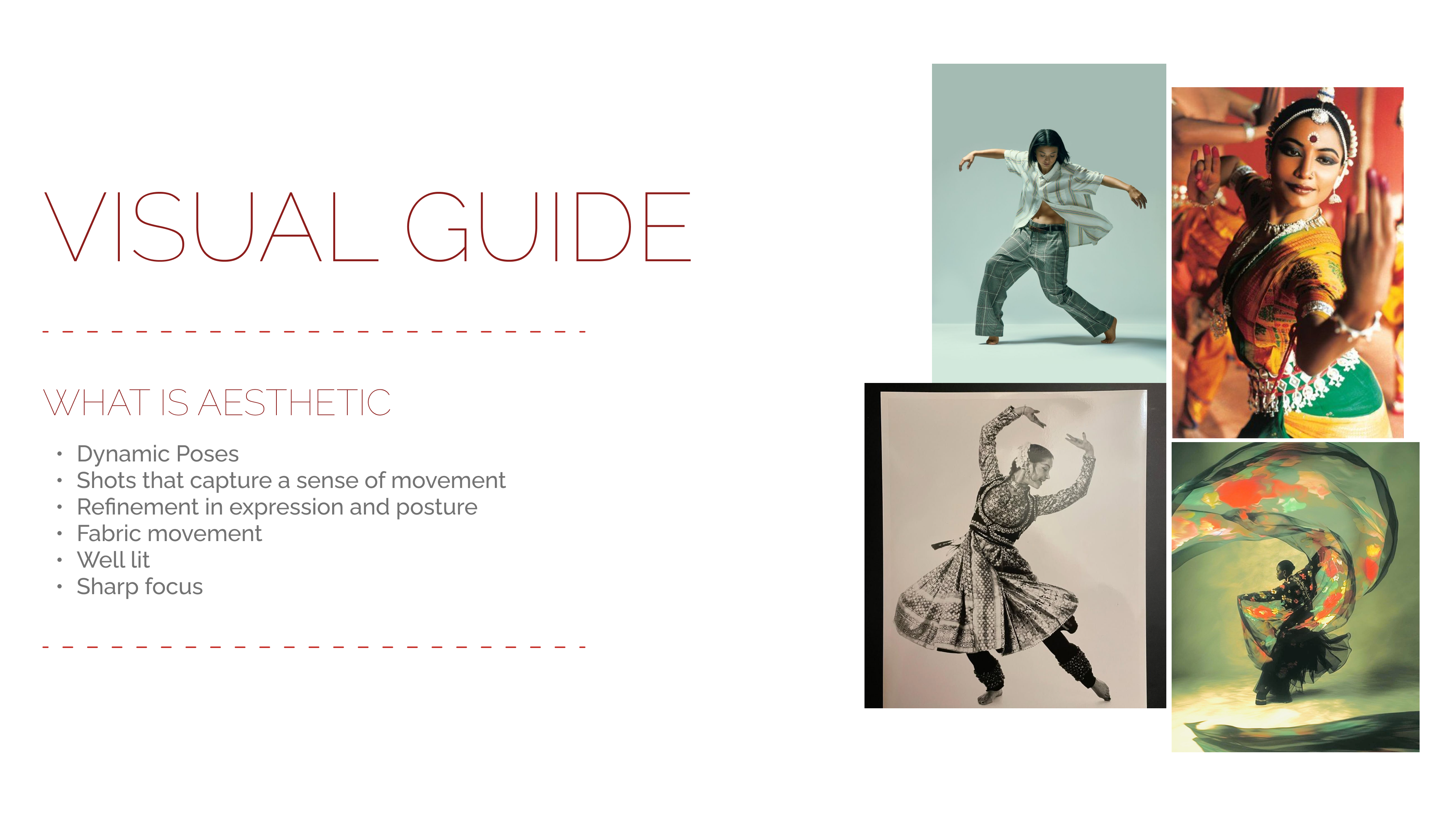
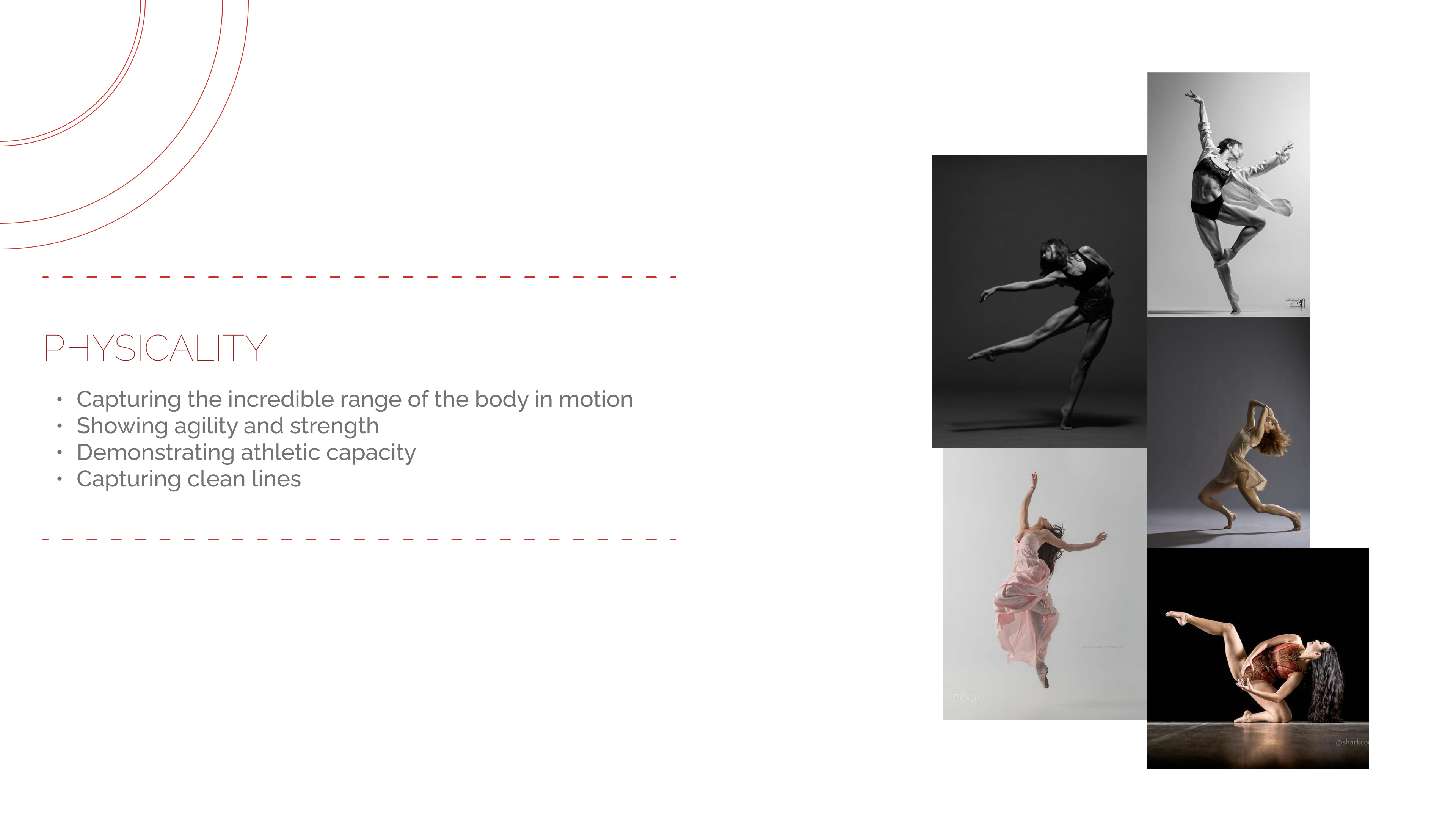
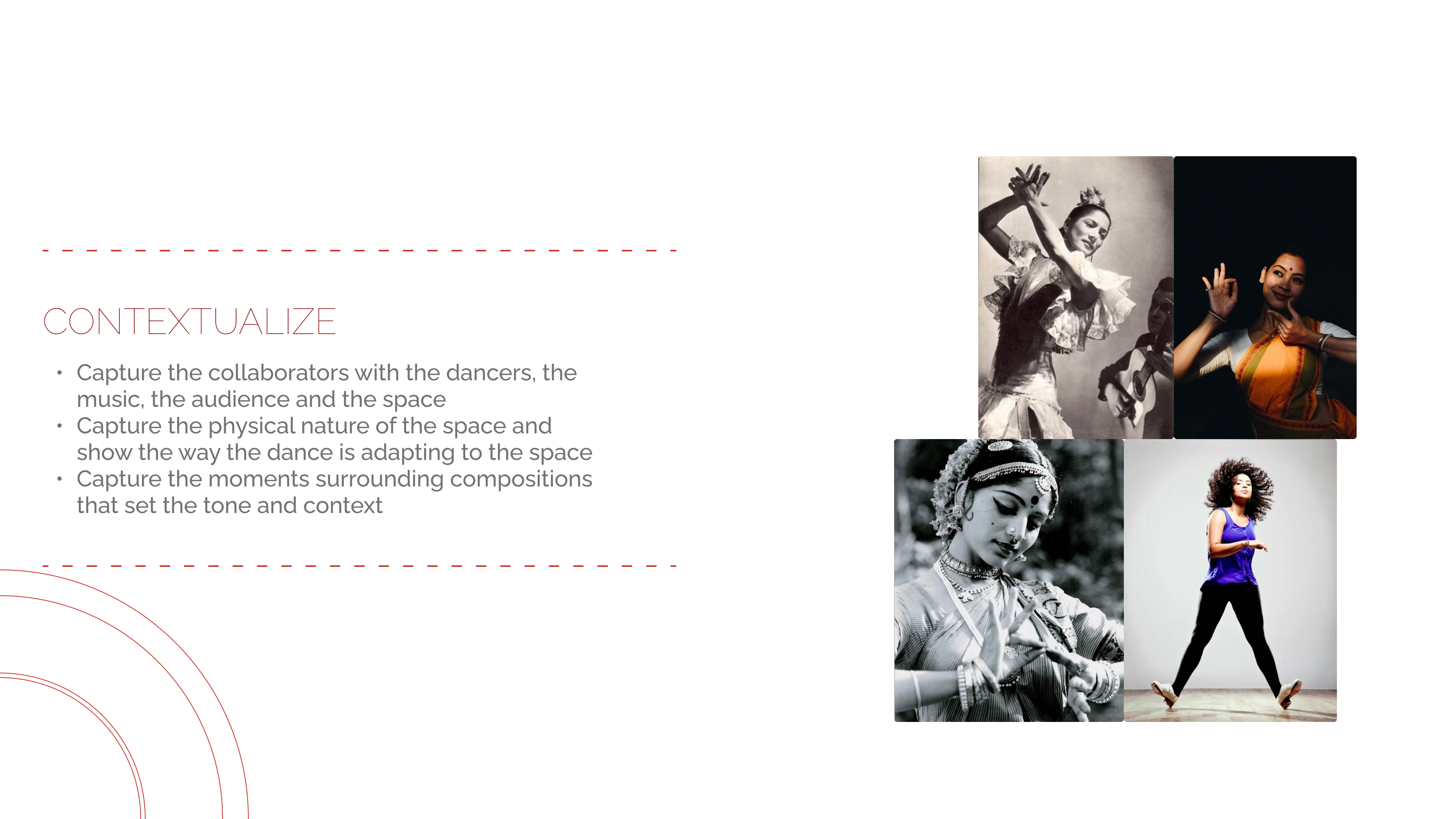
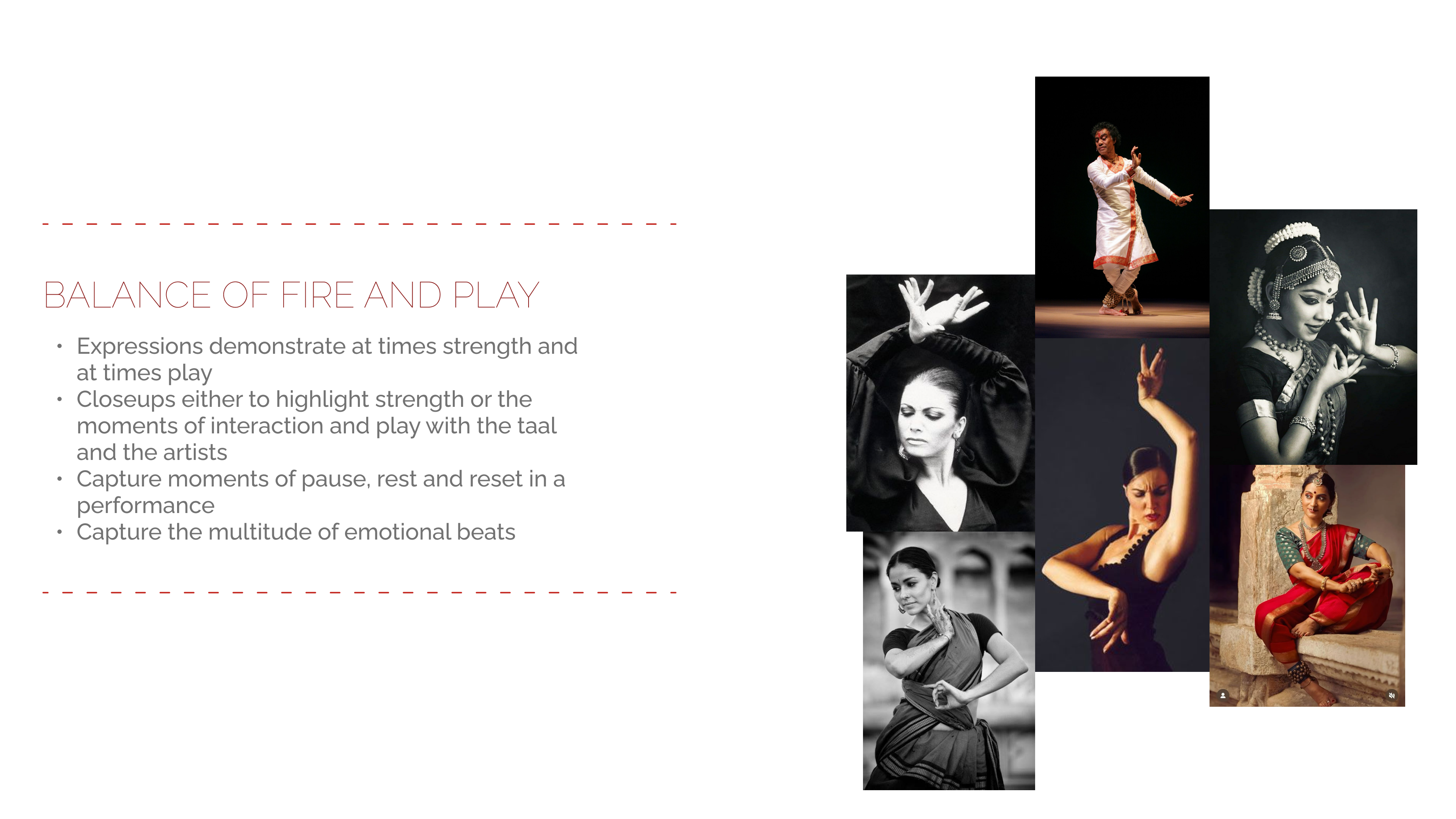
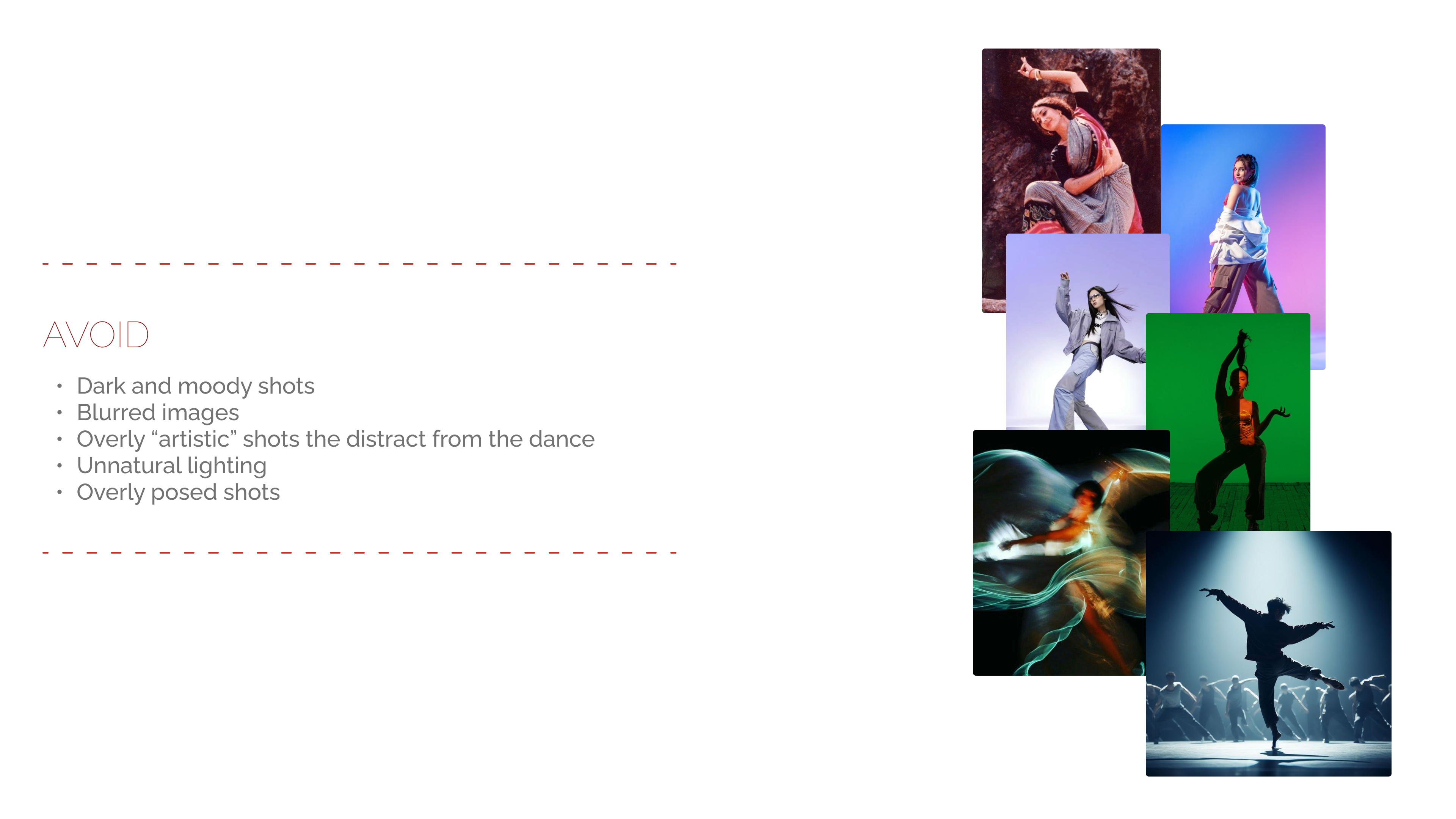
The Do/Don’t lives in a wider visual guide — five spreads, each isolating a single rule and pairing it with reference frames the next photographer can match against. Aesthetic, physicality, context, balance, what to avoid.
Dynamic poses. Refinement in expression. Fabric in motion. Sharp focus.
Mirror the blocks back. The work that was clear in the room now has a shape that travels.